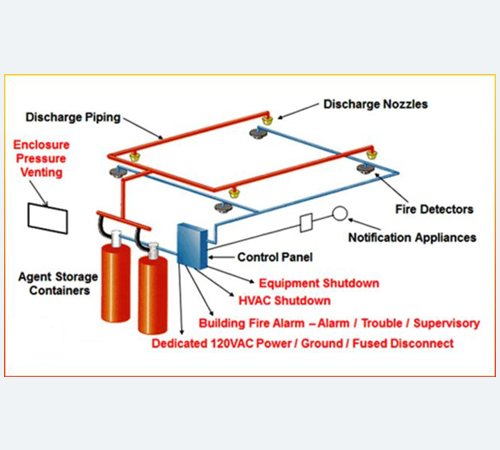
FM 200 Fire Suppression System Working Diagram
- Stock : In Stock
- Category : Fire Suppression Systems
- Sub Category : N/A
- Details : Key Components: Detection Devices: These include smoke detectors, heat detectors, flame detectors, and combination detectors. Control Panel: The central unit that receives signals from detection devices, Suppression Agent: The substance used to extinguish the fire, such as water, foam, dry chemical, carbon dioxide, or clean agent. Piping and Nozzles: The distribution system that delivers the suppression agent to the fire area. Storage Tank: Contains the suppression agent (for systems that require a large volume).
General Working Principle:
Detection: Fire detection devices sense heat, smoke, or flames and send signals to the control panel.
Activation: The control panel processes the signals and determines if a fire condition exists. If so, it activates the suppression system.
Discharge: The suppression agent is released through the piping system and discharged through nozzles towards the fire area.
Suppression: The agent extinguishes the fire by removing one or more elements of the fire triangle (heat, oxygen, fuel).
Types of Fire Suppression Systems:
Wet Pipe Sprinkler System: Water is always present in the pipes, and sprinkler heads activate when exposed to heat.
Dry Pipe Sprinkler System: Pipes are filled with compressed air, and water is introduced only when a fire is detected.
Deluge System: All sprinkler heads are open, and water is released when the system is activated.
Foam System: Produces a foam blanket to smother the fire.
Gas Suppression System: Uses inert gases like carbon dioxide or nitrogen to displace oxygen.
Clean Agent System: Employs environmentally friendly agents to extinguish the fire without damaging equipment.
Additional Considerations:
System Design: The type of system and components are selected based on the specific fire hazards and requirements of the protected area.
Maintenance: Regular inspections, testing, and maintenance are crucial for ensuring the system's effectiveness.
Evacuation: Fire suppression systems are designed to control fires, but occupants should still evacuate safely when an alarm sounds.